
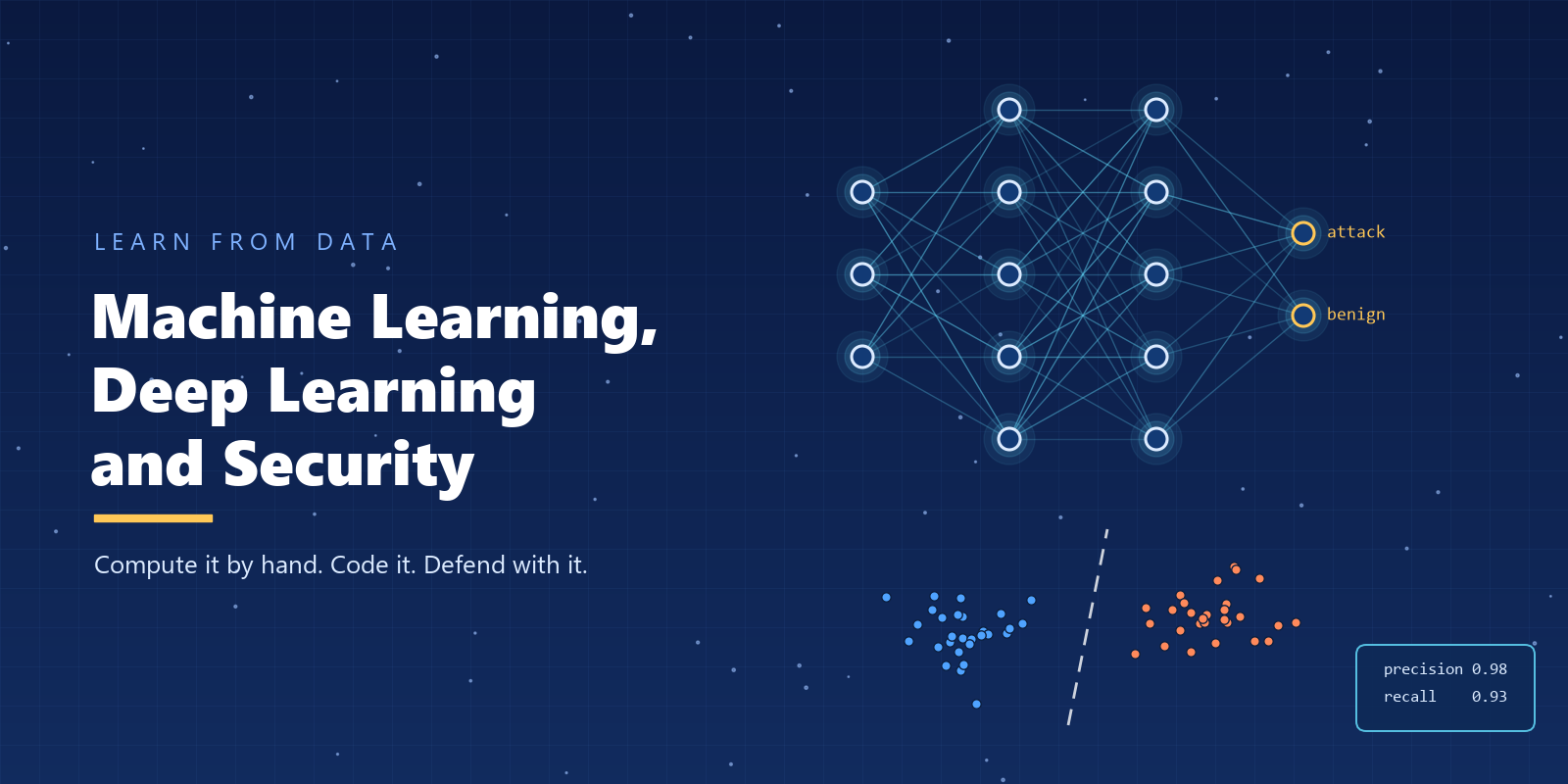
Machine learning, deep learning and their application to network and security problems: supervised and unsupervised algorithms computed by hand and in Python, neural networks with TensorFlow, spam, intrusion and malware detection, and a network case study.
- Teacher: mohamedamine beghoura
- Teacher: Foudil Belhadj
Welcome to Programming by Constraints (CP)
Hello and welcome! I am Ilyas Benmessahel from the Department of Computer Science. I have created this course specifically for 4th-year Engineering students in Computer Security (Semester 1).
This module introduces Constraint Programming (CP), a powerful declarative paradigm used in Artificial Intelligence to solve complex combinatorial problems. Instead of specifying how to solve a problem (imperative approach), you will learn how to model what must be true by defining variables, domains, and constraints (CSP).
Course Outline:
-
Chapter 1: Introduction, fundamental definitions, and real-world applications.
-
Chapter 2: Constraint Modeling (local vs. global constraints, matrix and graph representations, binarization) and classic problems (n-Queens, Magic Square, Golomb Ruler, etc.).
-
Chapter 3: Resolution Methods (systematic search, backtracking, branch and bound, constraint propagation, filtering algorithms, and heuristics).
- Teacher: ilyas benmessahel